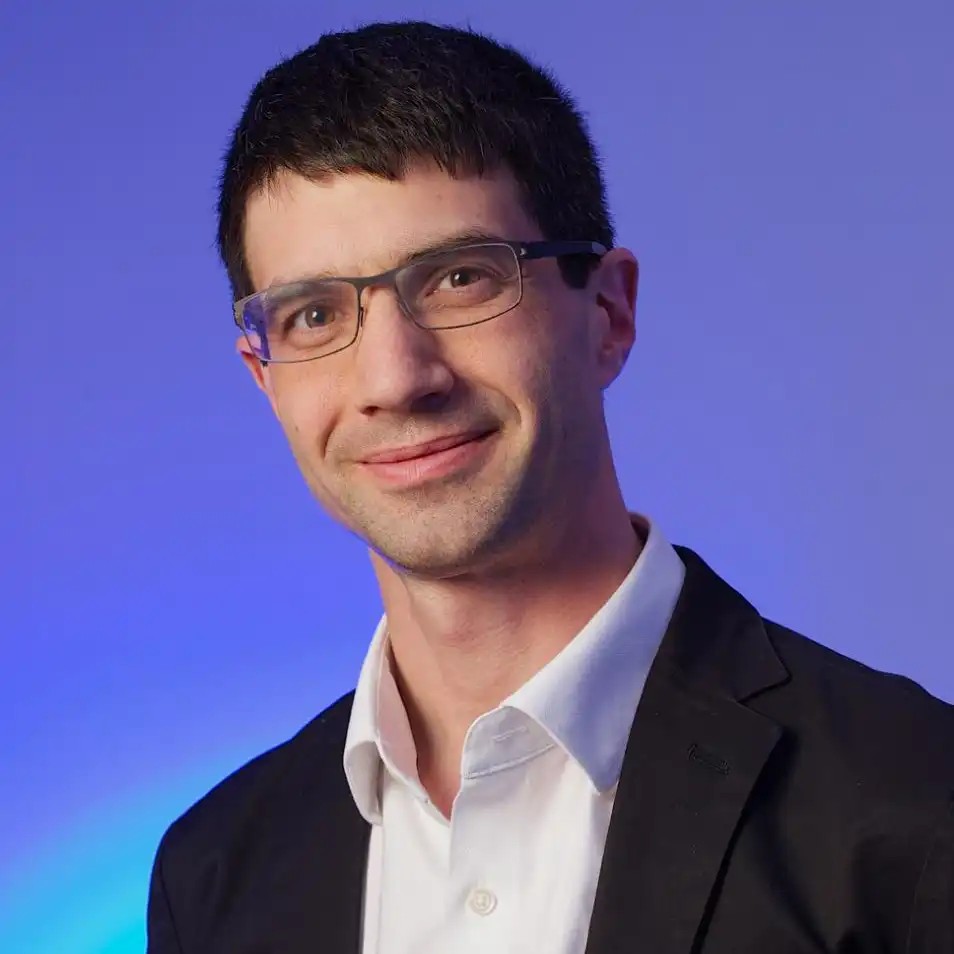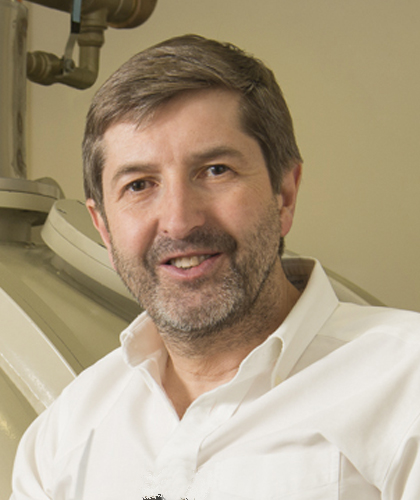
PQI is an organization pursuing quantum science and engineering in Pittsburgh. Like the field itself, PQI faculty are highly interdisciplinary, with members coming from departments and schools such as Physics, Chemistry, Engineering, and Computer Science at the University of Pittsburgh, Carnegie Mellon University, and Duquesne University. PQI operates by a set of bylaws, and is led by two co-directors and executive director, who are advised by a steering committee and supported by an admin and other committees, listed below.
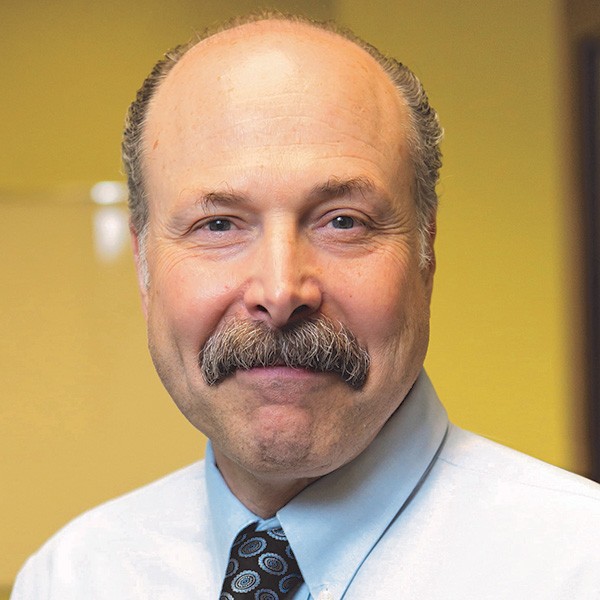
Co-Director: David Snoke
Co-Director: Benjamin Hunt
Executive Director: Rob Cunningham
Administrator: Krista Zottola
- Steering Committee
-
- Elizabeth Dickey
- Franz Franchetti
- Susan Fullerton
- Kenneth Jordan
- Vladyslav Kozii
- Thomas Purdy
- Kaushik Seshadreesan
- Simranjeet Singh
- Sridhar Tayur
- Wesley Transue
- Michael Van Stipdonk
- Nathan Youngblood
The PQI Steering committee purpose and structure is defined by the bylaws. It advises the Director and Executive Director on PQI activities and finances, including, but not limited to, awarding visiting scholar and postdoctoral fellowship positions, research awards and travel grants, and projects originating within the Center. It works with the Director and Executive Director to stand up external committees and supports the activities of the organization.
The Steering Committee meets twice a year.
- External Advisory Committee
-
The External Advisory Committee seeks to Increase (directly via board membership) the national and international awareness of PQI, its activities and its strengths, foster connections to other major centers in quantum science and technologies, provide advice on future directions, including opportunities for new interdisciplinary research directions and education programs, as well and relevant visitors/speakers/external contacts, and further enhance the scientific standing of PQI and impact of PQI activities through well-respected external advice.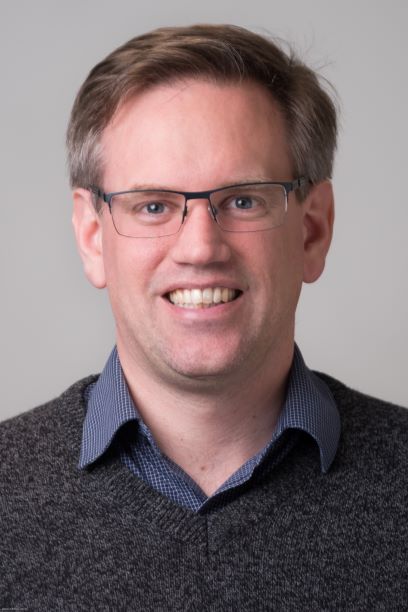 Chair, Andrew Daley
Andrew Daley is a Professor of Quantum Physics at the University of Oxford. Originally from New Zealand, he completed his PhD at the University of Innsbruck in Austria and was an Assistant Professor at the University of Pittsburgh before taking up a position as Professor of Theoretical Quantum Optics at the University of Strathclyde in 2013. His research bridges fundamental research in quantum optics and many-body physics to the design and applications of quantum technologies.
David Awschalom is the Liew Family Professor and Director of the Chicago Quantum Institute at the University of Chicago Pritzker School for Molecular Engineering, a Senior Scientist at Argonne National Laboratory, and Founding Director of the Chicago Quantum Exchange. He is also the inaugural Director of Q-NEXT, one of the US DOE Quantum Information Science Research Centers. He works in the fields of spintronics and quantum information engineering, exploring and controlling the spins of electrons, nuclei, and photons in semiconductors and molecules. His research includes implementations of information processing with potential applications in quantum computing, communication, and sensing.
Nathalie de Leon is a professor of Electrical and Computer Engineering at Princeton, where she focuses on quantum sensing with NV centers in diamond, quantum networks with solid state defect systems and nanophotonics, and new material platforms for superconducting qubits. She received her BS from Stanford University in 2004 and PhD from Harvard University in 2011. She then worked as a CIQM and Element Six postdoctoral fellow at Harvard. Nathalie joined the faculty of Princeton University as an assistant professor in Electrical and Computer Engineering in 2016. She is the co-director of the Princeton Quantum Initiative, and she is a Visiting Faculty Researcher at Google Quantum AI. Her group works at the interface of quantum optics, atomic physics, condensed matter and device physics, materials science, surface spectroscopy, nanofabrication, and spin physics to uncover sources of noise and loss in quantum systems, and uses these insights to design new quantum platforms and new tools for measurement. She is currently the materials thrust leader of the Co-design Center for Quantum Advantage, a DOE National Quantum Information Science Center, and she is the Chair-Elect of the APS Division of Quantum Information. Nathalie received the Air Force Office for Scientific Research Young Investigator Award in 2016, the Sloan Research Fellowship in Physics in 2017, the NSF CAREER Award in 2018, the DARPA Young Faculty Award in 2018, and the DOE Early Career Award in 2018, the Gordon and Betty Moore Foundation Experimental Physics Investigator Award in 2023, and the APS Rolf Landauer and Charles H. Bennett Award in Quantum Computing in 2023
Michael Hatridge is an Associate Professor of Applied Physics at Yale University. He received his B.S. from Texas A&M University and Ph. D. from U.C. Berkeley under the supervision of John Clarke. He did his postdoctoral at Yale in the group of Michel Devoret, with a focus on quantum effects in the readout of superconducting qubits, as well as the challenge of realizing high fidelity readout for quantum information processing. His laboratory (the Hatlab) focuses on the use of parametric drives to generate quantum controls, including single- and multi-qubit gates and engineered baths, as well as exploring how to use parametric couplers and controls to realize modular quantum computers. The Hatlab also uses parametric drives build quantum-limited parametric amplifiers for both studies of quantum measurement and practical, high fidelity projective qubit readout. He is the past director of the Pittsburgh Quantum Institute and is presently a Deputy Director of the Yale Quantum Institute.
Pedram joined the Google Quantum AI team in 2014. He is currently a Staff Research Scientist and leads the experimental effort on noisy intermediate scale quantum (NISQ) algorithms. Since 2019, Pedram has led NISQ experiments on demonstrating several novel quantum dynamics phenomena, including demonstrating time crystalline ordering, realizing topological states, realizing bound state of photons, and demonstrating braiding of non-Abelian anyons. The current focus of his team is studying non-equilibrium quantum dynamics beyond the capability of classical computers.
Ronald Walsworth leads an interdisciplinary research group with a focus on developing precision measurement tools and then applying them to problems in both the physical and life sciences. Multiple start-up companies have spun out of the Walsworth lab, with others being planned. He is also a Professor in the UMD Department of Physics and Founding Director of the UMD Quantum Technology Center.
The Committee meets twice a year, including in-person at PQI events or online. It provides the director and executive director with a yearly assessment of PQI and advice on current status and opportunities. Finally, it offers advice on seminar speakers and speakers for the annual PQI event
- Seminar Series Committee
-
- Shubhayu Chatterjee
- Joyce Jiang
- Daniel Justice
- Jyoti Katoch
- Juan Jose Mendoza Arenas
- Roger Mong
- Xulong Tang
The seminar committee seeks to raise awareness of important new results by established and rising quantum science and engineering experts, encouraging information sharing and establishing new connections. Speakers come from the local region as well as national and international organizations, and speakers are encouraged to meet and discuss new ideas and potential for new collaborations. Seminars occur weekly during the fall and spring semesters.
The committee meets approximately twice a year to select speakers. Membership comes from multiple disciplines and multiple universities, as the field is broad.
- Industry Outreach Committee
-
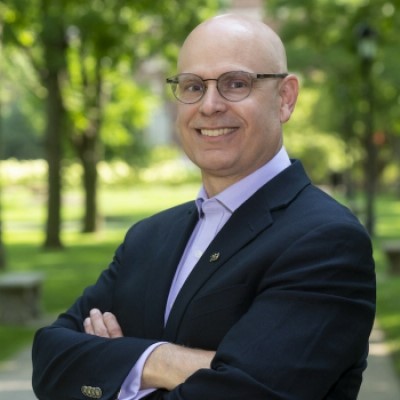
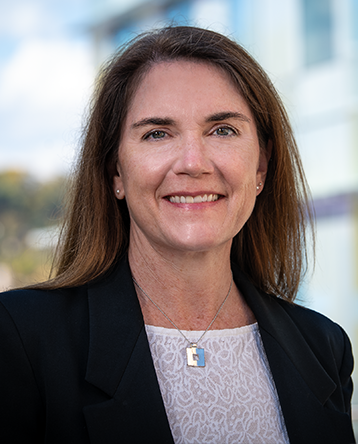
- Co-Chair, Rob Cunningham
- Co-Chair, Elizabeth Dickey
The industry outreach committee seeks to connect professionals in industry with leading experts in the field of quantum technology, bridging the gap between academia and industry. Local industry can partner with PQI and become an Industrial Sponsor. These partnerships allow for collaborative research, networking opportunities, visibility and recognition, and access to cutting-edge research.
- Student & Postdoc Seminar Committee
-
The Student and Postdoc Seminar committee energizes, unifies, and promotes quantum science and engineering across PQI’s member universities. Students present their work to each other, ensuring broad awareness of research being performed in our region. We also set aside some time to network with friends and colleagues, so that new research ideas will be developed and explored across schools and universities.
We meet weekly, and typically one of our members presents their research, gaining valuable practice and visibility. We provide a friendly, inclusive forum for testing out new ideas with our peers.
- Social Media Coordination Committee
-
Our Social Media Coordination Committee contributes to PQI's social media presence through channels including LinkedIn, Twitter and YouTube. News about PQI events and seminars are updated on these online social platforms. It also serves as a first destination for developing PQI website materials, giving followers the inside scoop on PQI discoveries, including local research, opportunities and information about joining PQI. These efforts enhance PQI's visibility and recognition, as well as the networking opportunities and quality of programming for PQI members.
The committee meets weekly online. The members come from multiple research backgrounds.